

Fire in the Sky Firefighter Conference Ends Today Following an Intense Focus on the Hose Stretch and Truck Operations

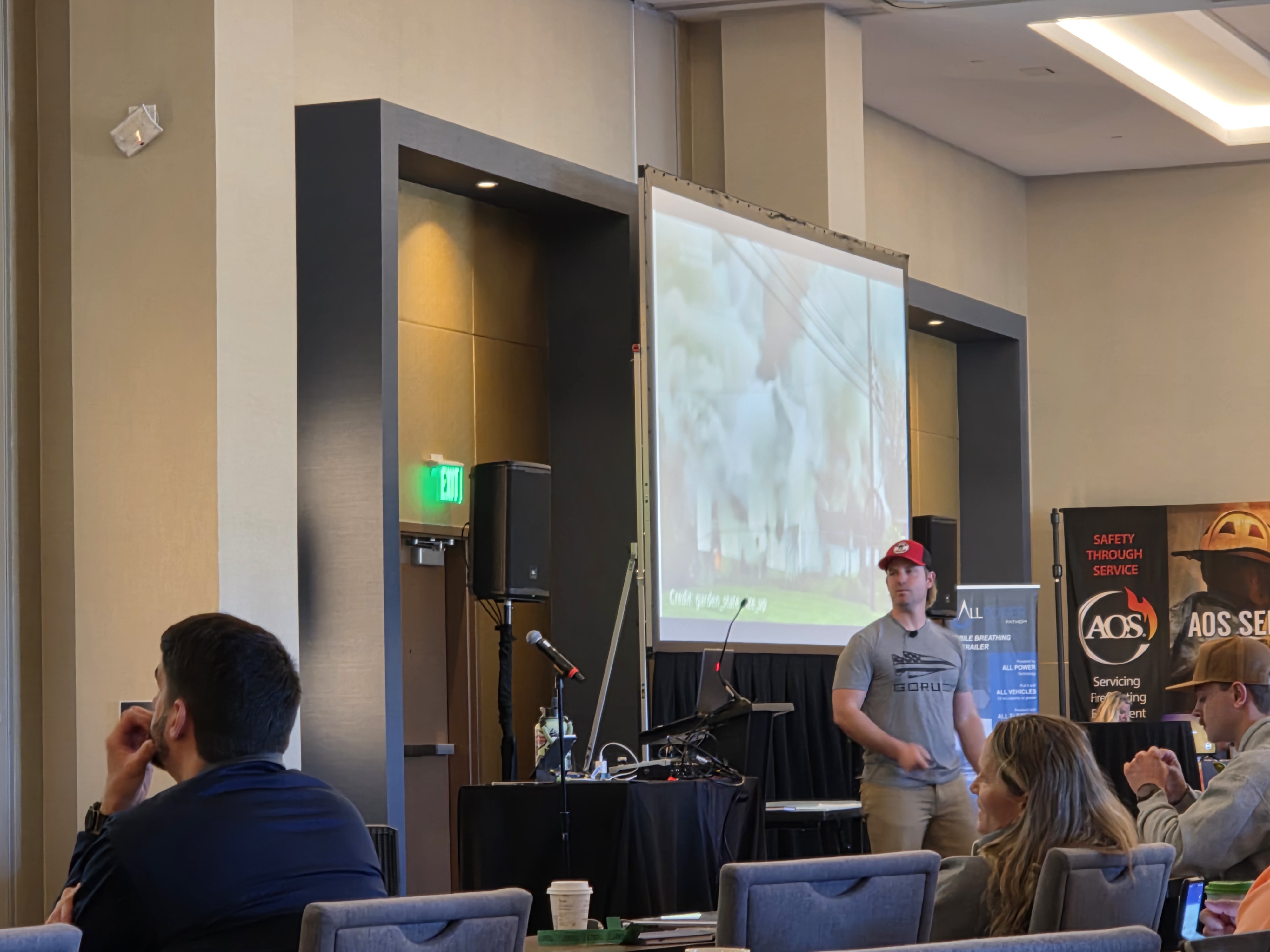
Jay Bonnifield
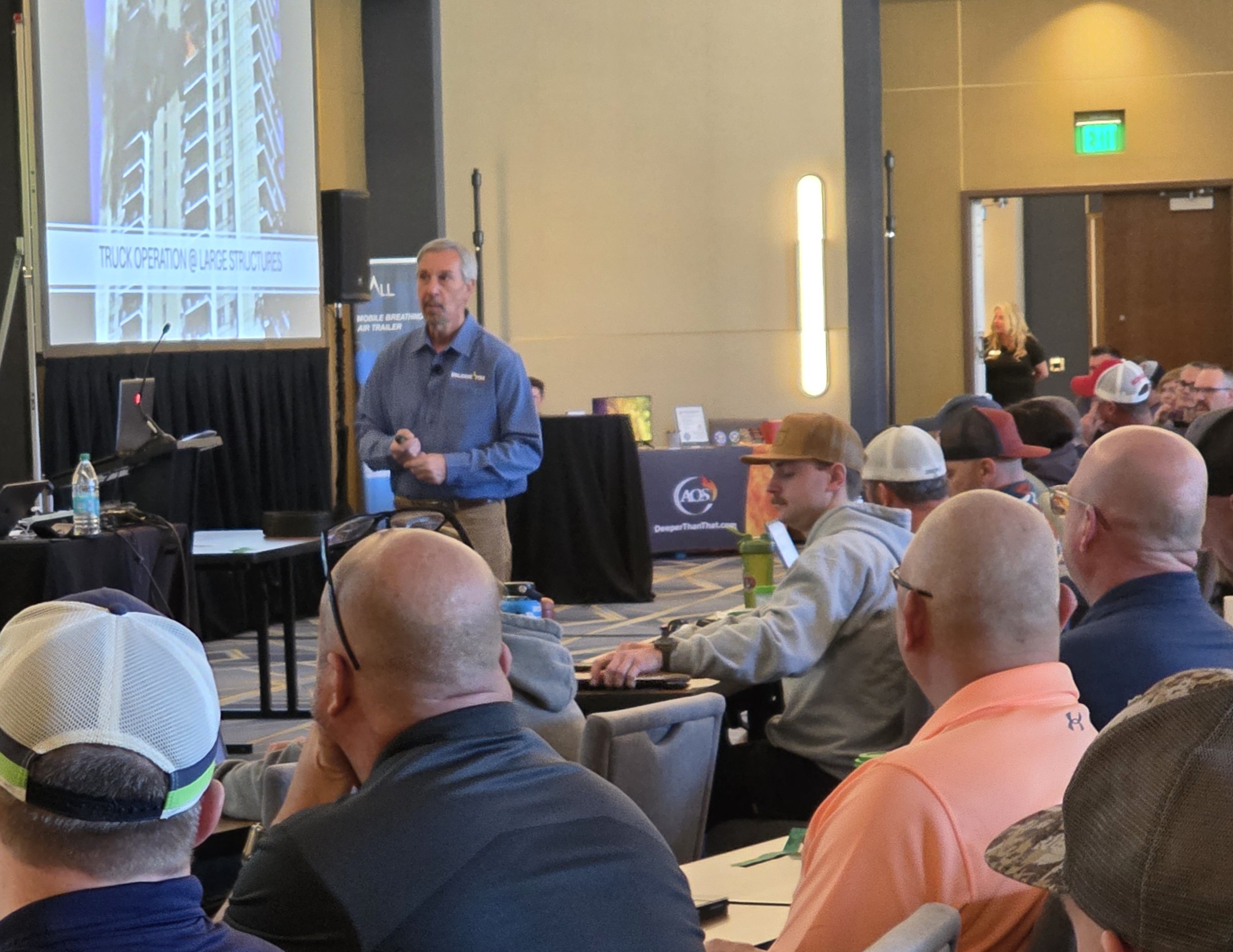
Mike Ciampo
Fire in the Sky brought new awareness, strategies and tactics to address the challenges of big-box, high-rise and mid-rise structures populating the landsape
COLORADO SPRINGS, CO, UNITED STATES, March 19, 2026 /EINPresswire.com/ -- There is something that happens on the final day of a conference like this. The notebooks are full. The conversations from the night before are still going in the hallways. And the instructors who step to the front of the room on Thursday morning know that the people looking back at them are already thinking about Monday — about the firehouse, the crew, the captain's briefing, the next call. Day Three of Fire in the Sky 2026 honored that moment. Two instructors. Two subjects. Both of them aimed squarely at the firefighters who carry a line and climb a ladder.Jay Bonnifield — Captain, Everett Fire Department (Washington) Session: "Anatomy of a Stretch"
There is a version of firefighting that looks clean on a whiteboard. The stretch is calculated. The hose lays out perfectly. The air holds. The crew stays oriented. And then there is the version that happens inside a real building — a mid-rise apartment complex at 2 a.m., a large commercial structure with an unusual footprint, a stairwell that turns the wrong direction. That gap between the plan and the reality is exactly what Captain Jay Bonnifield came to close.
His session, Anatomy of a Stretch, is about one of the most consequential decisions an arriving engine company makes — the stretch call. In a low- or mid-rise residential structure, how that decision is made, how quickly it is made, and how accurately it accounts for the actual layout of the building can be the difference between a fire that is stopped at the apartment door and one that takes the floor. Bonnifield works through fire behavior cues, building construction clues visible from the street, and the mental model that lets a first-arriving crew make a decisive call under pressure. He also addresses the companies that come in behind — the ones tasked with confinement lines and protecting searchable space — and gives them a system for operating with the same decisiveness.
For firefighters who run residential apartments and mixed-use mid-rises every shift, it is one of the most immediately applicable sessions on the entire three-day agenda. The stretch is not glamorous. But it is the foundation on which everything else rests.
Mike Ciampo — Retired Lieutenant, Fire Department of New York Session: "Truck Company Operations at Large Structure Fires"
Michael Ciampo did not drift into the fire service. Ciampo became a fourth-generation volunteer firefighter in New Jersey. Six years later, he turned professional with the District of Columbia Fire Department before moving to FDNY in 1990 where he spent the next 34 years, 32 of them assigned to tower ladder companies in the Bronx and upper Manhattan, working out of firehouses with names that carry weight inside the FDNY: Engine 46's "Cross Bronx Express." Tower Ladder 45's "The Might of the Heights."
When Mike Ciampo teaches truck company operations in large structures, he is not drawing from research alone. He is drawing from 39 years of standing on the apparatus floor, riding to the fire, and making decisions in buildings that demanded everything he had. His session covers the full spectrum of what truck companies face when the structure gets big — compactor fires, wind-driven apartment fires, high-rise residential work, the particular hazards of modern light-frame "toothpick tower" construction, and the coordination problem that defines large-structure truck work: how to stay oriented, maintain communication, and operate effectively when the building itself is working against you.
It is a fitting session to close a conference built around the idea that the details matter — that how you position the truck, where you open a roof, how you search ahead of a line — all of it adds up, in a large structure, in ways it doesn't in a single-family house. Ciampo has spent a career proving that the details are the job.
What Leaves the Building When the Conference Ends
Two hundred and twenty firefighters walked into Hotel Polaris in Colorado Springs on Tuesday morning. They came from departments large and small, from cities and suburbs, from jurisdictions that already have high-rise buildings on their response areas and from departments that can see them going up. They spent three days in rooms with eleven of the most experienced large-structure firefighters in North America, taking notes, asking hard questions, and thinking seriously about work that does not allow for half-measures.But here is what matters most about those 220 seats: not one of them goes home alone.
Every firefighter who walked out of Fire in the Sky on Thursday afternoon carries that education back to a firehouse. They sit down at the kitchen table and they talk. They pull up their department's SOGs and they ask better questions. They run a drill based on something they heard in a session. They show a junior firefighter a concept they had never considered before. They raise their hand in a battalion meeting and they say, I think we need to look at this differently. Multiply that by 220. Multiply it by every crew those firefighters work with, every shift they pull, every department those conversations reach. What happened in Colorado Springs this week did not educate 220 people. It sent a current through hundreds of fire departments, and that current does not stop moving.
That is the work the Firefighter Air Coalition came here to do — and it is not finished, as they plan for FIre in the Sky, St. Charles, MO, October 19-21, 2026.
Shawn Longerich
Firefighter Air Coalition
+1 317-690-2542
email us here
Visit us on social media:
LinkedIn
Instagram
Facebook
Legal Disclaimer:
EIN Presswire provides this news content "as is" without warranty of any kind. We do not accept any responsibility or liability for the accuracy, content, images, videos, licenses, completeness, legality, or reliability of the information contained in this article. If you have any complaints or copyright issues related to this article, kindly contact the author above.
