

'First Year They Sleep': Valor Villages Bets on Slow Repair — For Veterans With PTSD, and For the Ground They Work

Valor Villages
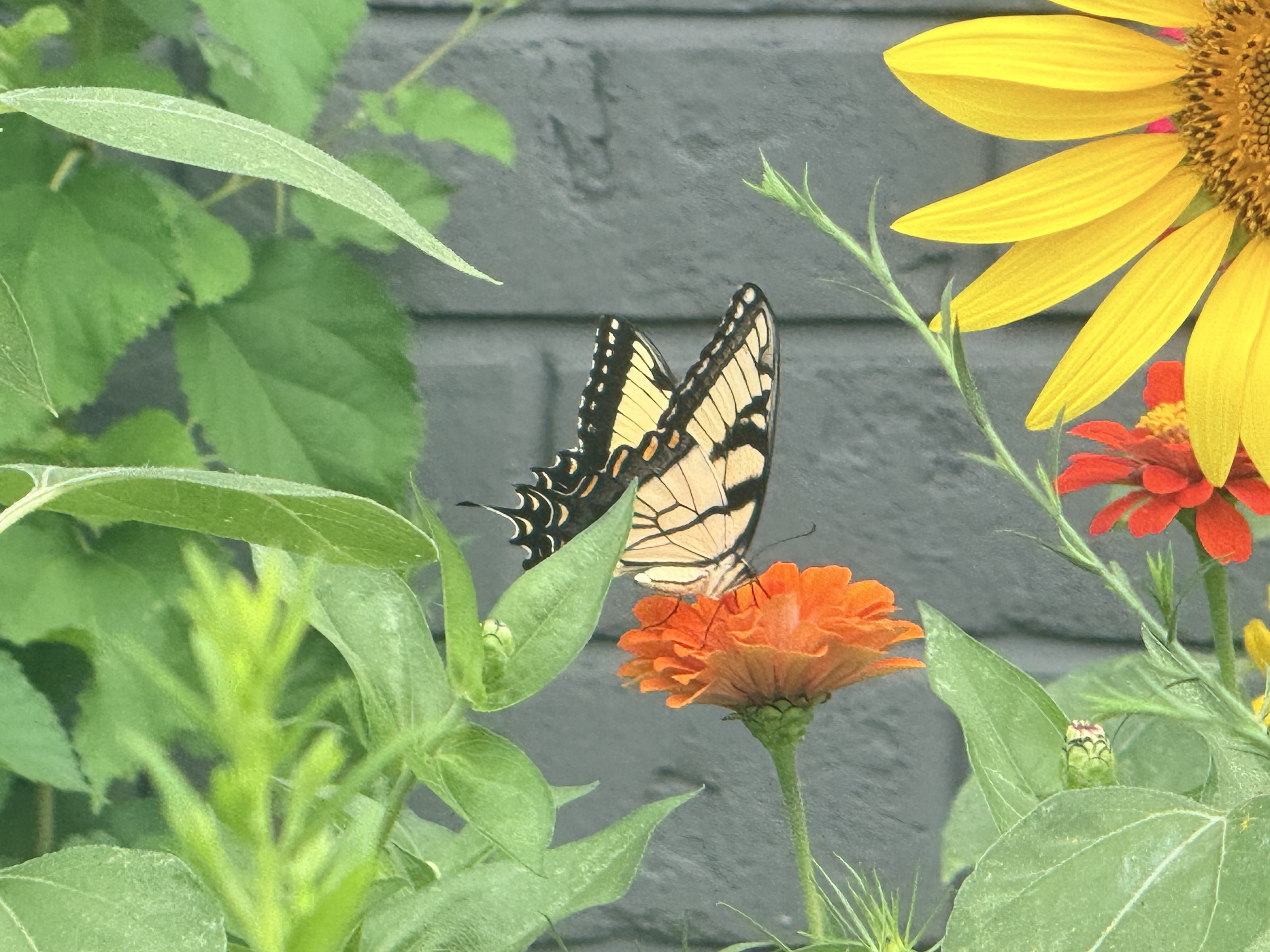
The wildflower garden right outside the patient exam room windows.
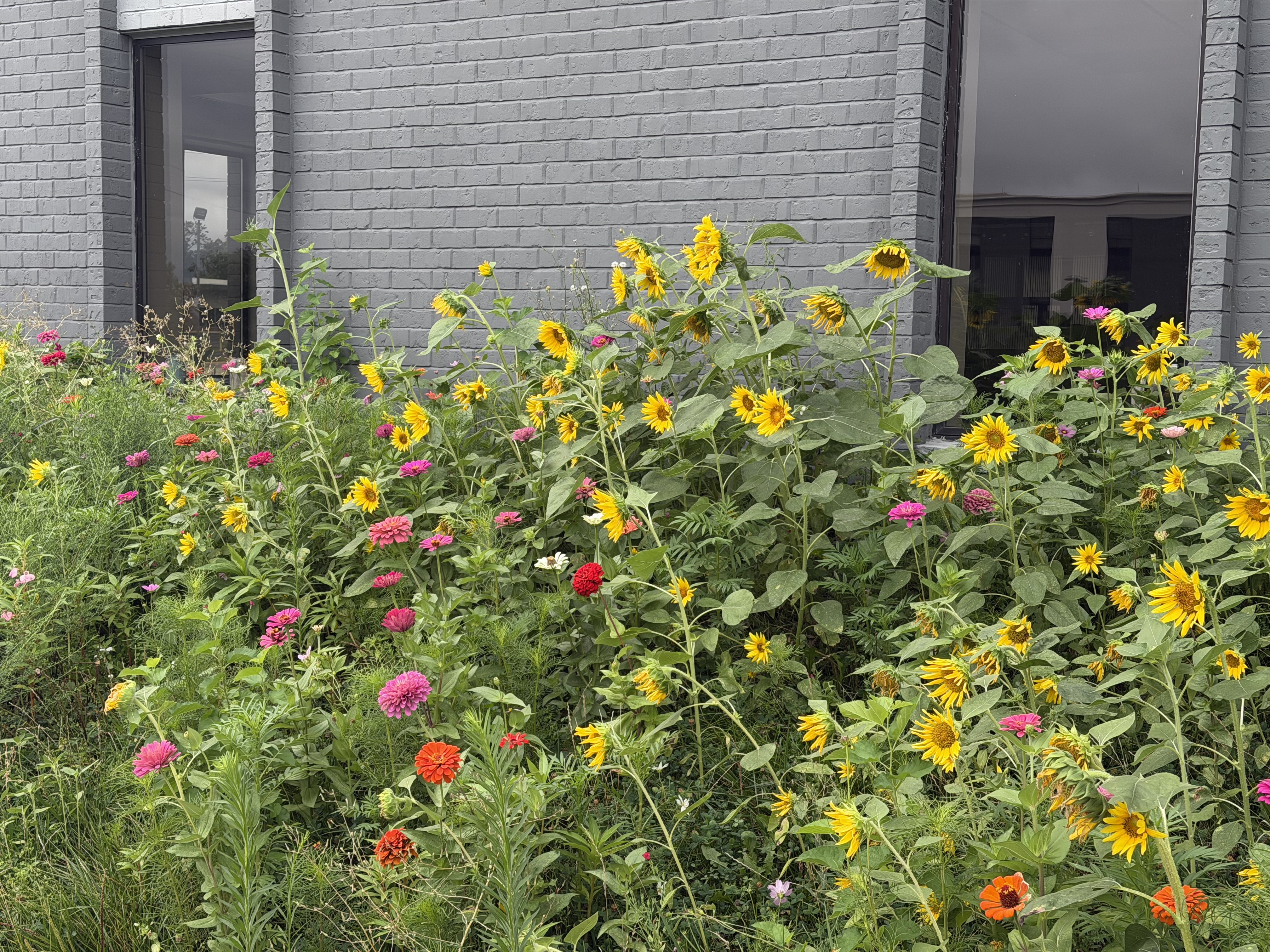
What patient's see from their exam room.
Horticulture retraining program pairs quiet-by-design vocational training with a tallgrass prairie restoration and a planned green roof in Woodson Terrace.
The program grew out of a March 2026 partnership between Valor Villages and the Padda Institute, and out of clinical experience with veterans treated through the PTSD section of painmd.tv. It is anchored by a 0.2-acre restoration of historical Missouri tallgrass prairie — an outdoor classroom that is also working green infrastructure.
The site was seeded into the season's last freeze-thaw window, deliberately. Most native wildflower and sedge seed needs cold-moist stratification to break dormancy, and the nightly freeze and daytime thaw work broadcast seed into the cracking soil without tillage. The planting is in its first growing season.
The problem, in numbers
- 14.4% lifetime, 7.3% past month. PTSD prevalence among U.S. veterans in the 2025–2026 National Health and Resilience in Veterans Study — up sharply from 8.0–9.4% and 4.7–5.0% in the 2011–2020 waves.
- 14% of men, 24% of women. Share of the 5.8 million veterans served by VA in FY2024 carrying a PTSD diagnosis.
- Hyperarousal drives noise intolerance. Disturbed sleep and exaggerated startle track significantly with reported noise sensitivity in veterans — who also adapt less readily to repeated startling sounds.
A leaf blower firing up behind a trainee ends the training day. Most programs are not designed to account for that. This one is.
Why horticulture
Therapeutic horticulture is not a first-line PTSD treatment, and it supplements — never replaces — cognitive processing therapy, prolonged exposure, and EMDR. The evidence is real:
- 211 patients, p < 0.001. A 2024 randomized controlled trial in Scientific Reports found horticultural therapy significantly reduced anxiety versus standard care at four weeks.
- Cortisol drops in 30–60 minutes. Observed in the University of Tennessee's veteran-specific horticultural therapy program.
- Single-session, sustained effect. Pilot work in at-risk veterans found lasting reductions in stress, depression, pain, and loneliness — all suicide risk factors.
Design follows: capped cohorts; powered equipment restricted to announced windows; solo work first, then paired, then crew, on the trainee's timeline; a low-stimulus retreat within sight of every work zone, so stepping back never means leaving.
The job market is there — BLS projects roughly 171,600 annual openings for grounds maintenance workers through 2034, in a field requiring no formal credential.
Year one looks like failure. That's the lesson.
Restoration crews have an adage: first year they sleep, second year they creep, third year they leap. A new prairie does not look like a prairie. It looks patchy, weedy, unfinished — because the seeded natives are pouring everything into roots instead of into anything a passerby can see. Professionals expect it. Neighbors don't. The most common way a young restoration dies is that someone lost patience with the appearance and reached for the mower.
"It's the same error we make with the patient," said Gurpreet Singh Padda, MD, chief medical officer of Valor Villages. "You judge the surface, you don't like what you see, and you intervene against it — while the actual repair is happening underground, where you can't grade it. Two years in, nobody is asking about the weeds."
That is the terrain model taught on painmd.tv, applied to ground: symptoms are signals, not the disease, and recovery comes from correcting the underlying structural, neurological, and metabolic conditions rather than suppressing what shows on the surface. As roots deepen, they feed the fungi, nematodes, and invertebrates that rebuild soil structure and restore the ground's capacity to hold water. The weeds recede — not because they were sprayed, but because the terrain stopped favoring them.
Veterans hear this in week one. Then they spend two years watching it happen.
What 0.2 acres actually does
- Less than 1% remains. Missouri held ~15 million acres of tallgrass prairie — a third of the state, including nearly half of present-day St. Louis. Fewer than 45,000 original acres survive.
- Roots to 15 feet. Two-thirds of a prairie's living mass is below ground.
- 100% infiltration. In a USGS side-by-side study, a prairie-planted rain garden in clay infiltrated all precipitation and snowmelt across four water years; the turf equivalent managed 96%.
- 25-fold. Increase in saturated hydraulic conductivity under deep-rooted prairie plantings versus turfgrass.
The planting is designed as pollinator habitat. USFWS proposed listing the monarch as threatened in December 2024, estimating a 56–74% extinction probability for the eastern migratory population over 60 years; the final rule remains pending. Missouri sits in the migration corridor and in 2016 became the first state with a dedicated monarch and pollinator plan, targeting 385,000 acres over two decades.
Valor Villages is aligning the planting with Missouri Department of Conservation community conservation practices and sourcing species per Grow Native! guidance. Early planning is underway for an extensive green roof on the Woodson Road building — a class of system EPA credits with 60–100% runoff reduction.
Veterans trained on site will install, monitor, and maintain both systems.
Amanda Reynolds
http://www.ValorVillages.org
+1 314-714-0902
amandar@valorvillages.org
Visit us on social media:
LinkedIn
Facebook
Legal Disclaimer:
EIN Presswire provides this news content "as is" without warranty of any kind. We do not accept any responsibility or liability for the accuracy, content, images, videos, licenses, completeness, legality, or reliability of the information contained in this article. If you have any complaints or copyright issues related to this article, kindly contact the author above.
