OEM Basin Manufacturing Partner Kadelg Brings Customization into Coordinated Bathroom Product Programs
CHAOZHOU, GUANGDONG, CHINA, September 29, 2026 /EINPresswire.com/ -- In the global sanitaryware industry, vanity washbasins serve as the visual centerpiece and high-touch functional focal point of modern residential and commercial bathrooms. Brand owners and wholesale distributors seeking an OEM wash basin manufacturing partner in China require advanced ceramic casting expertise, tight dimensional tolerance control, and flexible customization capabilities. When ceramic basins are engineered to integrate seamlessly with bathroom furniture, countertops, and tapware, importers can deliver coordinated bathroom suites that satisfy demanding architectural specifications.
Commercial plumbing producer Guangdong Zhongtao Technology Co., Ltd. manufactures premium vitreous china sanitaryware in Chaozhou under its renowned Kadelg brand. Utilizing high-pressure slip casting machinery and computer-monitored tunnel kilns, the factory produces an extensive range of countertop vessel basins, undermount sinks, drop-in lavatories, and semi-recessed vanity basins. For international buyers building comprehensive bathroom programs, partnering with Kadelg provides access to dependable OEM customization backed by decades of export manufacturing excellence.
Define the Basin’s Job Within the VanityErgonomic Demands Across Residential and Commercial Spaces
Bathroom vanity designers select basin mounting styles according to four commercial criteria:
Undermount format: seamless countertop integration allowing easy wipe-down of water into the bowl.
Vessel basin styling: dramatic above-counter focal point with simplified single-hole plumbing cutouts.
Drop-in rim mounting: self-rimming perimeter lip protecting composite and laminate countertop edges.
Semi-recessed layout: projecting basin front optimizing counter space in narrow bathroom footprints.
In compact urban residential developments, vanity tops demand slim-rimmed ceramic basins that maximize interior bowl capacity while preserving usable countertop landing space for toiletries. In high-traffic commercial washrooms, by contrast, specifiers prioritize deep, anti-splash basins with broad perimeter rims that contain water turbulence and facilitate rapid janitorial maintenance.
Underside Flatness and Countertop Mounting Precision
Underside planarity is critical for countertop and semi-recessed wash basin installations. If the base of a ceramic vessel basin warps during high-temperature kiln firing, the fixture will rock on the vanity top, creating irregular gaps that require unsightly beads of silicone sealant. Kadelg employs precision automated bottom-grinding machinery to finish the underside plane of every vessel basin to a strict tolerance within one millimeter, ensuring dead-flat, wobble-free seating on stone, quartz, or solid wood countertops.
Countertop basin mounting styles also dictate faucet spout reach and deck height requirements. An above-counter vessel requires a tall, high-rise basin mixer or a wall-mounted concealed tapware valve, whereas an undermount or semi-recessed basin pairs naturally with standard deck-mounted brassware. Sourcing teams must coordinate these physical dimensions to prevent water splashing and ensure comfortable hand-washing clearance.
Choose a Mounting Format Before Revising the Shape
Before requesting aesthetic or dimensional modifications, procurement teams must select the appropriate mounting format for their target market. The structural relationship between the ceramic basin and the vanity countertop determines mold tooling, structural reinforcement, and installation accessories. The two dominant mounting formats in modern bathroom programs are countertop vessel basins and undermount basins.
Countertop and Above-Counter Relationships
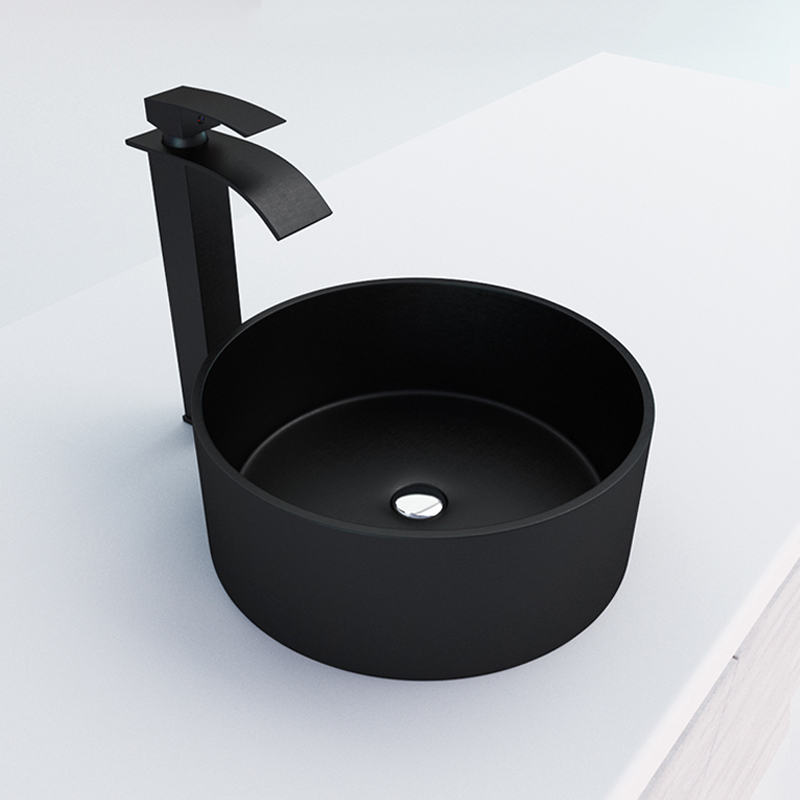
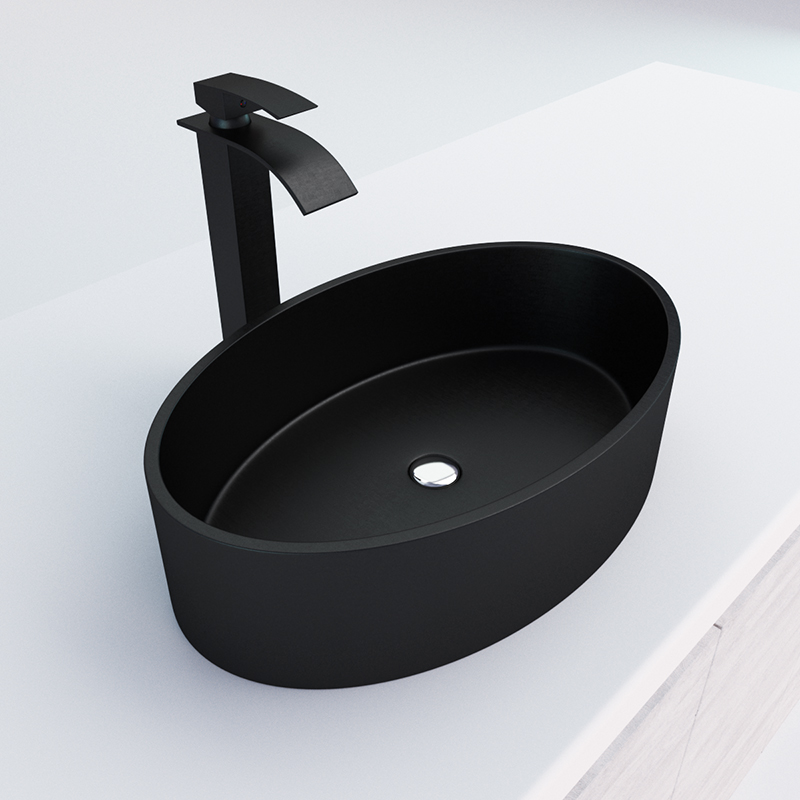
An above-counter countertop basin rests directly on top of the finished vanity surface, requiring only a simple cutout hole for the waste outlet and drain tailpiece. This format provides maximum visual impact, showcasing the exterior ceramic profile, glazed contours, and color finishes. It has become a dominant trend in luxury boutique hotels, modern master suites, and contemporary powder rooms.
Glaze chemical durability is particularly important in commercial washrooms where basins face constant exposure to cosmetics, abrasive liquid soaps, and disinfectant cleaning agents. Kadelg formulates its vitrified glazes with high concentrations of silica and alumina, producing an impermeable, non-porous vitreous surface that resists chemical etching, scratching, and stubborn water stains.
The bottom mounting plane of a countertop vessel must be ground completely flat to prevent rocking on granite, quartz, or timber surfaces. Kadelg subjects all countertop vessels to rigorous planarity checks, ensuring that installers can achieve clean, airtight silicone joints that prevent moisture intrusion into the underlying vanity cabinet.
Undermount and Furniture Relationships
In contrast, an undermount ceramic wash basin attaches to the underside of the vanity countertop, creating a continuous, seamless surface where water and debris can be wiped directly from the stone into the bowl. This format dominates high-volume multi-family residential construction, commercial office towers, and hospitality projects where effortless daily maintenance is essential.
Undermount manufacturing demands strict adherence to perimeter rim tolerances and mounting flange flatness. Because the polished edge of the stone countertop overhangs the ceramic rim, any waviness or dimensional distortion along the basin's upper flange creates uneven reveals and compromises the waterproof epoxy seal. Kadelg engineers its undermount models with reinforced, precision-calibrated rims that guarantee consistent countertop cutouts.
Waste outlet and faucet deck dimensional accuracy ensures dependable trim-out on the jobsite. Standardized 45 mm drain cutouts and precisely positioned overflow ports allow plumbers to install universal pop-up wastes and overflow tubes without modifying standard brassware components.
Coordinate Water Delivery and Drainage as Separate Interfaces
A frequent source of jobsite installation failure is misaligning the basin's water delivery and drainage interfaces. Faucet pairing dictates whether the ceramic basin requires pre-punched tap holes or tall vessel mixers mounted to the vanity countertop.
Faucet pairing dictates whether the ceramic basin requires pre-punched deck tap holes. For single-hole deck mixers, the tap hole must be punched cleanly at 35 mm diameter with sufficient clearance from the back wall to accommodate pop-up waste control rods. For minimalist wall-hung or tall vessel mixers, the basin is manufactured without tap holes, presenting an uninterrupted ceramic rim.
Drainage interfaces require equal engineering discipline. Specifiers must determine whether the basin requires an integrated overflow passage or an unslotted free-flowing waste strainer, ensuring compliance with local plumbing regulations.
Customization Starts with an Identified Baseline
Successful private-label OEM development proceeds most efficiently when engineering teams start from an established, proven ceramic baseline. Designing a vitrified ceramic basin from a blank sheet of paper involves substantial mold tooling expense and extended trial firings to compensate for clay shrinkage and warpage during kiln firing.
Customization options can range from applying proprietary matte glaze finishes, such as matte black, charcoal grey, or soft cream, to modifying exterior perimeter dimensions or laser-etching client logos onto the ceramic surface. By modifying an existing high-yield Kadelg mold platform, buyers achieve distinctive custom designs in a fraction of the development time while minimizing upfront tooling investments.
Use Sample Fit to Resolve the Complete Arrangement
Before authorizing commercial mass production, sourcing directors conduct physical fit trials by assembling complete vanity prototypes. These mock-ups bring together the ceramic basin, the cut countertop slab, the brass mixer tap, the waste trap, and the vanity cabinet drawers.
Quality audits verify dimensional conformance against approved engineering drawings, checking overflow drainage rates, bottom flatness, and glaze uniformity across multiple lighting angles. This physical validation confirms that the entire assembly functions harmoniously before high-volume container shipments leave the factory.
Commercial project specifiers and facility planners are invited to visit https://www.kadelg.com/ to examine comprehensive CAD drawings, product specifications, and OEM customization capabilities for Kadelg's complete export collection of vitreous china washbasins.
Commercial plumbing producer Guangdong Zhongtao Technology Co., Ltd. manufactures premium vitreous china sanitaryware in Chaozhou under its renowned Kadelg brand. Utilizing high-pressure slip casting machinery and computer-monitored tunnel kilns, the factory produces an extensive range of countertop vessel basins, undermount sinks, drop-in lavatories, and semi-recessed vanity basins. For international buyers building comprehensive bathroom programs, partnering with Kadelg provides access to dependable OEM customization backed by decades of export manufacturing excellence.
Define the Basin’s Job Within the VanityErgonomic Demands Across Residential and Commercial Spaces
Bathroom vanity designers select basin mounting styles according to four commercial criteria:
Undermount format: seamless countertop integration allowing easy wipe-down of water into the bowl.
Vessel basin styling: dramatic above-counter focal point with simplified single-hole plumbing cutouts.
Drop-in rim mounting: self-rimming perimeter lip protecting composite and laminate countertop edges.
Semi-recessed layout: projecting basin front optimizing counter space in narrow bathroom footprints.
In compact urban residential developments, vanity tops demand slim-rimmed ceramic basins that maximize interior bowl capacity while preserving usable countertop landing space for toiletries. In high-traffic commercial washrooms, by contrast, specifiers prioritize deep, anti-splash basins with broad perimeter rims that contain water turbulence and facilitate rapid janitorial maintenance.
Underside Flatness and Countertop Mounting Precision
Underside planarity is critical for countertop and semi-recessed wash basin installations. If the base of a ceramic vessel basin warps during high-temperature kiln firing, the fixture will rock on the vanity top, creating irregular gaps that require unsightly beads of silicone sealant. Kadelg employs precision automated bottom-grinding machinery to finish the underside plane of every vessel basin to a strict tolerance within one millimeter, ensuring dead-flat, wobble-free seating on stone, quartz, or solid wood countertops.
Countertop basin mounting styles also dictate faucet spout reach and deck height requirements. An above-counter vessel requires a tall, high-rise basin mixer or a wall-mounted concealed tapware valve, whereas an undermount or semi-recessed basin pairs naturally with standard deck-mounted brassware. Sourcing teams must coordinate these physical dimensions to prevent water splashing and ensure comfortable hand-washing clearance.
Choose a Mounting Format Before Revising the Shape
Before requesting aesthetic or dimensional modifications, procurement teams must select the appropriate mounting format for their target market. The structural relationship between the ceramic basin and the vanity countertop determines mold tooling, structural reinforcement, and installation accessories. The two dominant mounting formats in modern bathroom programs are countertop vessel basins and undermount basins.
Countertop and Above-Counter Relationships
An above-counter countertop basin rests directly on top of the finished vanity surface, requiring only a simple cutout hole for the waste outlet and drain tailpiece. This format provides maximum visual impact, showcasing the exterior ceramic profile, glazed contours, and color finishes. It has become a dominant trend in luxury boutique hotels, modern master suites, and contemporary powder rooms.
Glaze chemical durability is particularly important in commercial washrooms where basins face constant exposure to cosmetics, abrasive liquid soaps, and disinfectant cleaning agents. Kadelg formulates its vitrified glazes with high concentrations of silica and alumina, producing an impermeable, non-porous vitreous surface that resists chemical etching, scratching, and stubborn water stains.
The bottom mounting plane of a countertop vessel must be ground completely flat to prevent rocking on granite, quartz, or timber surfaces. Kadelg subjects all countertop vessels to rigorous planarity checks, ensuring that installers can achieve clean, airtight silicone joints that prevent moisture intrusion into the underlying vanity cabinet.
Undermount and Furniture Relationships
In contrast, an undermount ceramic wash basin attaches to the underside of the vanity countertop, creating a continuous, seamless surface where water and debris can be wiped directly from the stone into the bowl. This format dominates high-volume multi-family residential construction, commercial office towers, and hospitality projects where effortless daily maintenance is essential.
Undermount manufacturing demands strict adherence to perimeter rim tolerances and mounting flange flatness. Because the polished edge of the stone countertop overhangs the ceramic rim, any waviness or dimensional distortion along the basin's upper flange creates uneven reveals and compromises the waterproof epoxy seal. Kadelg engineers its undermount models with reinforced, precision-calibrated rims that guarantee consistent countertop cutouts.
Waste outlet and faucet deck dimensional accuracy ensures dependable trim-out on the jobsite. Standardized 45 mm drain cutouts and precisely positioned overflow ports allow plumbers to install universal pop-up wastes and overflow tubes without modifying standard brassware components.
Coordinate Water Delivery and Drainage as Separate Interfaces
A frequent source of jobsite installation failure is misaligning the basin's water delivery and drainage interfaces. Faucet pairing dictates whether the ceramic basin requires pre-punched tap holes or tall vessel mixers mounted to the vanity countertop.
Faucet pairing dictates whether the ceramic basin requires pre-punched deck tap holes. For single-hole deck mixers, the tap hole must be punched cleanly at 35 mm diameter with sufficient clearance from the back wall to accommodate pop-up waste control rods. For minimalist wall-hung or tall vessel mixers, the basin is manufactured without tap holes, presenting an uninterrupted ceramic rim.
Drainage interfaces require equal engineering discipline. Specifiers must determine whether the basin requires an integrated overflow passage or an unslotted free-flowing waste strainer, ensuring compliance with local plumbing regulations.
Customization Starts with an Identified Baseline
Successful private-label OEM development proceeds most efficiently when engineering teams start from an established, proven ceramic baseline. Designing a vitrified ceramic basin from a blank sheet of paper involves substantial mold tooling expense and extended trial firings to compensate for clay shrinkage and warpage during kiln firing.
Customization options can range from applying proprietary matte glaze finishes, such as matte black, charcoal grey, or soft cream, to modifying exterior perimeter dimensions or laser-etching client logos onto the ceramic surface. By modifying an existing high-yield Kadelg mold platform, buyers achieve distinctive custom designs in a fraction of the development time while minimizing upfront tooling investments.
Use Sample Fit to Resolve the Complete Arrangement
Before authorizing commercial mass production, sourcing directors conduct physical fit trials by assembling complete vanity prototypes. These mock-ups bring together the ceramic basin, the cut countertop slab, the brass mixer tap, the waste trap, and the vanity cabinet drawers.
Quality audits verify dimensional conformance against approved engineering drawings, checking overflow drainage rates, bottom flatness, and glaze uniformity across multiple lighting angles. This physical validation confirms that the entire assembly functions harmoniously before high-volume container shipments leave the factory.
Commercial project specifiers and facility planners are invited to visit https://www.kadelg.com/ to examine comprehensive CAD drawings, product specifications, and OEM customization capabilities for Kadelg's complete export collection of vitreous china washbasins.
Guangdong Zhongtao Technology Co., Ltd.
Kadelg
email us here
Visit us on social media:
Instagram
Facebook
YouTube
X
Legal Disclaimer:
EIN Presswire provides this news content "as is" without warranty of any kind. We do not accept any responsibility or liability for the accuracy, content, images, videos, licenses, completeness, legality, or reliability of the information contained in this article. If you have any complaints or copyright issues related to this article, kindly contact the author above.